As a dedicated supplier in the rubber cable industry, I am thrilled to share with you the intricate process of how rubber cables are manufactured. From the raw materials to the final product, every step is crucial in ensuring the quality and performance of these essential electrical components. Rubber Cable

Raw Materials Selection
The journey of rubber cable manufacturing begins with the careful selection of raw materials. The primary components include rubber compounds and conductors. The rubber compounds used in cable insulation and sheathing play a vital role in determining the cable’s properties, such as flexibility, resistance to heat, chemicals, and abrasion.
Natural rubber, derived from the latex of rubber trees, is known for its excellent elasticity and electrical insulation properties. However, it may have limitations in terms of heat resistance and durability. Synthetic rubbers, such as ethylene propylene rubber (EPR), neoprene, and silicone rubber, are often preferred for their enhanced performance characteristics. EPR, for example, offers good heat and weather resistance, making it suitable for outdoor and underground applications.
Conductors are typically made of copper or aluminum due to their high electrical conductivity. Copper is the preferred choice for most applications because of its superior conductivity, ductility, and corrosion resistance. Aluminum conductors are also used, especially in high-voltage transmission lines, due to their lower cost and lighter weight.
Mixing the Rubber Compounds
Once the raw materials are selected, the next step is to mix the rubber compounds. This process involves combining the base rubber with various additives to enhance its properties. Additives may include fillers, such as carbon black or silica, to improve the strength and abrasion resistance of the rubber; plasticizers to increase flexibility; antioxidants to prevent oxidation and aging; and curing agents to cross-link the rubber molecules and give it the desired shape and properties.
The mixing process is carried out in a mixer, which can be a Banbury mixer or an open mill. In a Banbury mixer, the rubber and additives are loaded into a chamber and mixed under high pressure and temperature. The open mill, on the other hand, consists of two rotating rollers that knead the rubber and additives together. The mixing时间 is carefully controlled to ensure a homogeneous mixture and to develop the desired properties of the rubber compound.
Extrusion of the Rubber Insulation and Sheathing
After the rubber compounds are mixed, they are ready for extrusion. Extrusion is the process of forcing the rubber compound through a die to form a continuous shape. In the case of rubber cables, the extrusion process is used to apply the insulation and sheathing layers around the conductor.
The conductor is first fed through the center of the extruder, which is a machine that consists of a screw and a barrel. The rubber compound is heated and melted in the barrel and then forced through the die by the rotating screw. The die is designed to shape the rubber compound into the desired thickness and diameter of the insulation or sheathing layer.
The extrusion process is critical in ensuring the quality and consistency of the insulation and sheathing layers. The temperature, pressure, and speed of the extruder must be carefully controlled to prevent defects such as voids, cracks, or uneven thickness. Quality control measures, such as online thickness monitoring and dielectric testing, are often implemented during the extrusion process to ensure that the cables meet the required specifications.
Stranding and Cabling
Once the insulation is applied to the conductor, the next step is to strand the insulated conductors together to form a cable. Stranding is the process of twisting multiple conductors or insulated conductors together to increase the flexibility and strength of the cable. The stranding process can be either concentric or non-concentric, depending on the application and the required cable properties.
In concentric stranding, the conductors are twisted around a central core in a circular pattern. This type of stranding is commonly used in power cables to reduce the electrical losses and improve the electrical performance. Non-concentric stranding, on the other hand, involves twisting the conductors in a random or irregular pattern. This type of stranding is often used in control cables and communication cables to provide flexibility and reduce the crosstalk between the conductors.
After the stranding process, the cables are usually cabled together to form a multi-core cable. Cabling involves twisting multiple stranded conductors or insulated cables together to form a single cable. The cabling process is similar to the stranding process, but it may involve additional steps such as the application of a filler material to fill the gaps between the cores and to provide mechanical support.
Curing of the Rubber
The next step in the manufacturing process is curing the rubber. Curing, also known as vulcanization, is the process of chemically cross-linking the rubber molecules to improve its strength, elasticity, and durability. The curing process is typically carried out in a heated chamber or a continuous vulcanization line.
In a batch curing process, the cables are placed in a steam or hot air autoclave and heated to a specific temperature and pressure for a certain period of time. The heat and pressure cause the curing agents in the rubber compound to react with the rubber molecules, forming a three-dimensional network of cross-links. The curing时间 and temperature depend on the type of rubber compound used and the thickness of the insulation and sheathing layers.
In a continuous vulcanization line, the cables are passed through a series of heated tubes or chambers at a constant speed. The heating medium can be steam, hot air, or infrared radiation. The continuous vulcanization process offers several advantages over the batch curing process, such as higher production效率, better quality control, and the ability to produce longer lengths of cable.
Testing and Quality Control
After the curing process, the cables are subjected to a series of tests and quality control measures to ensure that they meet the required standards and specifications. These tests may include electrical tests, such as insulation resistance testing, dielectric strength testing, and capacitance testing, to verify the electrical performance of the cables; mechanical tests, such as tensile strength testing, elongation testing, and bending testing, to assess the mechanical properties of the cables; and environmental tests, such as heat resistance testing, cold resistance testing, and flame resistance testing, to evaluate the performance of the cables under different environmental conditions.
Quality control is an essential part of the rubber cable manufacturing process. It helps to ensure that the cables are safe, reliable, and meet the customer’s requirements. Our company has a strict quality control system in place, which includes in-process inspection, final inspection, and random sampling testing. We also work closely with our suppliers to ensure that the raw materials used in the manufacturing process meet our high-quality standards.
Packaging and Shipping
Once the cables have passed all the tests and quality control measures, they are ready for packaging and shipping. The cables are typically wrapped in a protective layer of plastic or paper and then coiled onto reels or spools. The reels or spools are then labeled with the cable规格, length, and other relevant information.
The packaging is designed to protect the cables during transportation and storage. It also helps to prevent damage to the cables from moisture, dust, and other environmental factors. Our company offers a variety of packaging options to meet the specific needs of our customers.
After the cables are packaged, they are loaded onto trucks, trains, or ships for shipping. We work with reliable logistics partners to ensure that the cables are delivered to our customers in a timely and efficient manner.
Conclusion
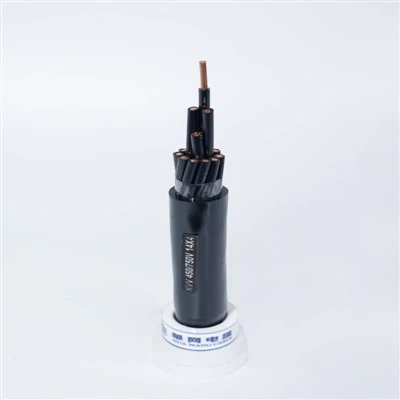
In conclusion, the manufacturing process of rubber cables is a complex and highly technical procedure that involves multiple steps, from raw materials selection to packaging and shipping. Each step is crucial in ensuring the quality and performance of the cables. As a leading rubber cable supplier, we are committed to providing our customers with high-quality cables that meet their specific needs and requirements.
Sheathed Wire If you are in the market for rubber cables, we invite you to contact us for more information about our products and services. Our experienced sales team is ready to assist you with your procurement needs and to provide you with a competitive quote. We look forward to the opportunity to work with you and to become your trusted partner in the rubber cable industry.
References
- "Electrical Wiring Handbook," by Thomas McPartland
- "Rubber Technology Handbook," by Werner Hofmann
- "Cable Engineering Handbook," by J. Neuffer
Anhui Huawang Cable Co., Ltd.
As one of the most professional rubber cable manufacturers and suppliers in China, we also support customized service. If you’re going to buy discount rubber cable, welcome to get pricelist from our factory. Quality products and reasonable price are available.
Address: No. 32, East Street, Batian Street, Datong Town, Tianchang City, Anhui Province
E-mail: Linda@huawangcable.com
WebSite: https://www.huawang-cable.com/
