If you’ve ever walked past a construction site or watched a renovation unfold in an old building, you’ve probably seen those long, adjustable metal poles propping up a ceiling, a beam, or even an entire section of a floor. Chances are, those are Acrow props—though you might not have known their name. As a supplier who’s worked with these pieces of equipment for over a decade, I get asked one question more than any other: “Can Acrow props actually be used for temporary support?” The short answer is yes, but it’s not just a yes or no—it’s a nuanced, science-backed yes that ties directly to their design, purpose, and how they’re deployed. Today, I want to break that down for anyone who’s ever wondered about these workhorse tools, especially if you’re in construction, renovation, or structural work. Acrow Prop
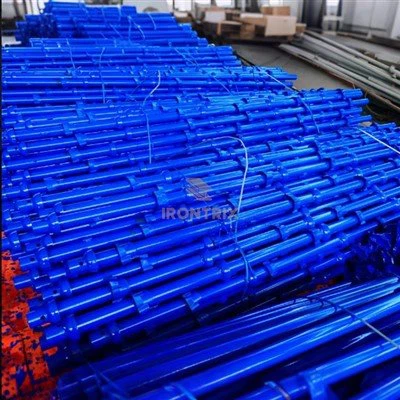
Let’s start with what Acrow props are, because a lot of people mix them up with other temporary support tools like jack posts or screw jacks. Unlike flimsy wooden studs or basic metal pipes, Acrow props are specifically engineered for temporary structural support. Their core design is an adjustable steel tube system: an outer steel cylinder, an inner tube that slides in and out, and a locking pin or screw mechanism that secures the length once it’s set. That adjustability is key—they can be custom-fit to support different heights, from a few feet to over 10 feet, which makes them versatile for everything from low-ceiling residential remodels to high-rise commercial construction.
But why are they reliable for temporary support, and not just a random metal pole? It comes down to two critical engineering factors: load capacity and stability. Acrow props are tested to handle static loads (permanent, non-moving weight) that range from 1 ton to 5 tons, depending on the model and size. That’s not a number I pull out of thin air—industry standards like ISO 9001 and European EN 1065 set strict testing protocols, requiring each prop to hold up to 2.5 times its rated maximum load before failing. For context, a standard ceiling joist might carry 100 to 200 pounds per linear foot, so a single Acrow prop rated for 2 tons is easily capable of supporting the weight of a section of ceiling, a small wall, or even temporary formwork for concrete.
Stability is another big one. Unlike wooden props, which can warp, shrink, or bend under pressure, steel Acrow props have a uniform, rigid structure that resists deformation. They also feature flat, wide base plates and top cups that distribute weight evenly, preventing them from sinking into soft ground or damaging the surface they’re supporting. A common mistake people make is propping directly on bare soil or uneven concrete—good deployment means placing a solid base (like a plywood plate or a steel sole plate) under the prop’s base to spread the load. That’s part of what makes Acrow props so effective: when used correctly, they create a stable, temporary vertical support that won’t shift mid-project.
Now, let’s talk about the specific use cases where Acrow props shine as temporary support, because that’s where you’ll see them most often. Residential renovation is a huge one: when homeowners want to remove a load-bearing wall to open up a living space, Acrow props are the go-to to hold up the upper floor or ceiling while the wall is being taken down. I’ve supplied props for projects where a family removed a 20-foot load-bearing wall between their kitchen and dining room—without Acrow props, that ceiling would have risked sagging or collapsing, even if the wall wasn’t carrying a massive weight. Another common residential use is supporting a new concrete slab or a loft conversion; builders use Acrow props to hold up temporary formwork while the concrete cures, which is critical because concrete is only at 70% of its strength after 7 days, so it needs that temporary support until it’s fully cured.
On commercial and industrial sites, Acrow props are used for larger-scale temporary support. Think about a factory that needs to repair a corroded steel beam in the ceiling—workers will place Acrow props under the beam to take the weight while they cut out and replace the damaged section. Or a road construction project where a utility tunnel needs temporary support while new pipes are installed; Acrow props can be adjusted to fit the tight underground space and handle the weight of the surrounding soil and traffic above. Even in disaster response, Acrow props are useful: after an earthquake damages a building’s structure, they can be deployed quickly to prop up a compromised wall or ceiling while emergency repairs are made.
But here’s the thing: Acrow props aren’t universal, and that’s a point I always stress to clients when I supply them. They’re temporary, not permanent support, so they’re not designed to be left in place for years. Their load capacity is for static, non-vibrating loads—so you wouldn’t use them to support a piece of machinery that’s constantly vibrating, like a compressor, because the repeated movement can weaken the locking mechanism over time. They also can’t handle lateral loads (side-to-side force) on their own; if you’re supporting a structure that’s at risk of shifting sideways, you’ll need to pair Acrow props with bracing, like diagonal steel struts, to keep the entire system stable. That’s a common mistake I see new contractors make—they buy Acrow props and assume they can fix any support problem, but using them incorrectly is as bad as not using them at all.
Another key factor for safe temporary support with Acrow props is inspection and maintenance. Just like any structural equipment, Acrow props degrade over time if they’re not cared for. Rust can weaken the steel, bent tubes can reduce load capacity, and worn locking mechanisms can slip. That’s why at our company, we always remind clients to inspect every prop before use: check for dents, corrosion, loose locking pins, and damaged base plates. If a prop has rust that’s more than surface-level, or a bent inner tube, it’s not safe to use—even if it was rated for 5 tons when new, damage can drop that capacity significantly. We also recommend that props are not modified—cutting them shorter, welding extra parts on, or using wooden inserts to adjust the length can void their load rating and create a safety hazard.
I’ve seen first-hand what happens when Acrow props are used incorrectly. A few years back, a small renovation contractor I worked with tried to use worn, rusted Acrow props to support a ceiling while removing a load-bearing wall. The props were 12 years old, and the locking mechanism was corroded, so when they started cutting the wall, one of the props slipped. The ceiling sagged, causing $20,000 in damage and a delay of six weeks. That’s why we don’t just supply props—we also offer guidance on proper use, because a prop is only as safe as the person deploying it. For temporary support, compliance with local building codes is non-negotiable too. Most regions require that temporary support systems, including Acrow props, are designed by a structural engineer for projects over a certain size, or for props supporting more than a specific load. Even if you’re doing a small residential project, taking the time to confirm that your prop setup meets local codes avoids costly mistakes or, worse, safety risks.
Now, let’s circle back to the original question: Can Acrow props be used for temporary support? The answer is a resounding yes, but with the right context. They’re not just random metal poles—they’re engineered, tested tools designed specifically for that purpose, with proven load capacity and stability when used correctly. Their versatility makes them ideal for everything from small residential remodels to large commercial construction, and their ability to adjust to different heights means they can adapt to almost any project’s needs.
But I also want to emphasize that temporary support isn’t something to take lightly. Acrow props are a critical part of a construction site’s safety, but they require proper inspection, deployment, and maintenance to work as intended. That’s why partnering with a reliable supplier matters—someone who doesn’t just sell you a prop, but also shares the knowledge to use it safely. If you’re planning a project that requires temporary support, whether it’s a load-bearing wall removal, concrete formwork, or structural repair, you need a partner who can supply high-quality, tested Acrow props and guide you through the process. Whether you’re a general contractor, a residential builder, or a DIY homeowner tackling a big project, we’re here to provide the right equipment and support to get the job done safely and efficiently.

If you’re ready to source Acrow props for your temporary support needs, or have questions about which size or model is right for your project, get in touch with our team to discuss your requirements. We’re here to help you make the right choice for your build, no matter the scale.
Acrow Prop References
- European Committee for Standardization. EN 1065: Steel props for use in building works – Specifications and test methods.
- International Organization for Standardization. ISO 9001: Quality management systems – Requirements.
- Construction Safety Association of Ontario. Temporary Structural Support Guidelines for Construction and Renovation Projects.
- National Association of Home Builders. Residential Construction Manual: Load-Bearing Wall Removal and Temporary Support.
Tianjin Irontrix Co., Ltd.
As one of the most professional acrow prop manufacturers and suppliers in China, we offer a wide range of products with superior quality. Please rest assured to wholesale bulk durable acrow prop made in China here from our factory. Contact us for more details.
Address: No.60 Jingwang Road, Daqiuzhuang Town, Jinghai District, Tianjin City, China
E-mail: info@irontrix.com
WebSite: https://www.irontrixscaffold.com/
