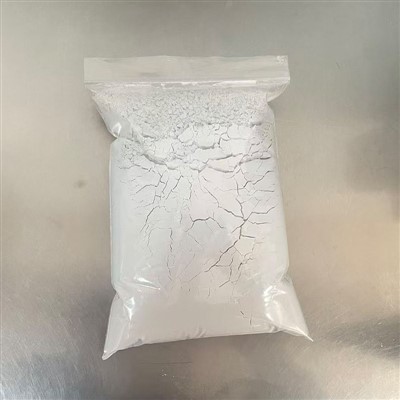
In the industrial landscape, hydrated lime powder stands as a crucial material with a wide range of applications, from water treatment and construction to agriculture and environmental protection. As a supplier of high – quality hydrated lime powder, I am often asked about the production process. In this blog post, I will take you through the journey of how hydrated lime powder is produced. Hydrated Lime Powder
Step 1: Quarrying Limestone
The production of hydrated lime powder starts at the quarry. Limestone, a sedimentary rock mainly composed of calcium carbonate ((CaCO_3)), is the primary raw material. Limestone deposits are found in many parts of the world, and choosing the right quarry is essential for ensuring the quality of the final product.
Our company sources limestone from carefully selected quarries where the limestone has a high calcium carbonate content and low impurities such as clay, silica, and iron oxides. The limestone is extracted from the quarry using blasting and mechanical excavation methods. Large – scale excavators and loaders are used to remove the overburden (the layer of soil and rock covering the limestone deposit) and then extract the limestone. The extracted limestone is then transported to the processing plant by trucks or conveyor belts.
Step 2: Crushing and Screening
Once the limestone reaches the processing plant, it goes through the crushing and screening stage. The primary crushers break down the large chunks of limestone into smaller pieces. Jaw crushers, gyratory crushers, or impact crushers are commonly used for this purpose. These crushers apply compressive or impact forces to break the limestone into more manageable sizes.
After the initial crushing, the limestone is sent to secondary crushers to further reduce its size. The crushed limestone is then screened to separate it into different size fractions. This is important because the quality and reactivity of the final hydrated lime powder are affected by the particle size of the limestone. The screened limestone particles within the desired size range are sent to the next stage of the production process, while the oversized particles are recycled back to the crushers for further processing.
Step 3: Calcination
Calcination is a critical step in the production of hydrated lime powder. It involves heating the crushed and screened limestone to a high temperature in a kiln to decompose the calcium carbonate ((CaCO_3)) into calcium oxide ((CaO)), also known as quicklime, and carbon dioxide ((CO_2)). The chemical reaction for the calcination of limestone is as follows:
(CaCO_{3}(s)\xrightarrow{Heat}CaO(s)+CO_{2}(g))
The kilns used for calcination can be of different types, such as rotary kilns or vertical shaft kilns. Rotary kilns are the most commonly used type in large – scale production. They are cylindrical in shape and rotate slowly as the limestone moves through them. The heat for calcination is provided by burning fossil fuels such as coal, oil, or natural gas. The combustion process takes place in the kiln, and the heat is transferred to the limestone, causing it to decompose.
The calcination process must be carefully controlled to ensure complete decomposition of the calcium carbonate and to produce high – quality quicklime. The temperature and residence time of the limestone in the kiln are crucial factors. A temperature of around 900 – 1000°C is typically required for the calcination reaction to occur at an appropriate rate. The residence time in the kiln ensures that all the limestone particles are fully calcined.
Step 4: Hydration
After the calcination process, the quicklime ((CaO)) is ready for hydration. Hydration is the process of converting quicklime into hydrated lime ((Ca(OH)_2)) by adding water. The chemical reaction for the hydration of quicklime is as follows:
(CaO(s)+H_{2}O(l)\rightarrow Ca(OH)_{2}(s)+Heat)
This reaction is highly exothermic, releasing a large amount of heat. The quicklime is usually added to a hydrator, which is a specialized equipment designed to mix the quicklime with water in a controlled manner. The water is carefully metered to ensure that the correct amount is added for complete hydration.
During the hydration process, the quicklime reacts with water to form a slurry of hydrated lime. The slurry is then further processed to remove any unreacted quicklime or impurities. This is often done through a series of screening and filtration steps. The resulting hydrated lime slurry is then dried to remove the excess water and produce hydrated lime powder.
Step 5: Milling and Packaging
Once the hydrated lime is dried, it is milled to achieve the desired particle size and fineness. Milling helps to improve the reactivity and dispersibility of the hydrated lime powder. Different types of mills, such as ball mills or hammer mills, can be used for this purpose. The milling process reduces the particle size of the hydrated lime and increases its surface area, which is important for its performance in various applications.
After milling, the hydrated lime powder is ready for packaging. It is typically packaged in bags or bulk containers, depending on the customer’s requirements. The packaging materials are chosen to ensure the quality and stability of the hydrated lime powder during storage and transportation.
Quality Control
Throughout the production process, strict quality control measures are implemented to ensure that the hydrated lime powder meets the required standards. Samples are taken at various stages of production and analyzed for chemical composition, particle size distribution, and other physical properties.
For example, the calcium hydroxide content of the hydrated lime powder is an important quality parameter. It can be determined by chemical analysis methods such as titration. The particle size distribution is measured using techniques like laser diffraction. By closely monitoring these quality parameters, we can ensure that our customers receive a consistent and high – quality product.
Applications of Hydrated Lime Powder
The high – quality hydrated lime powder produced through this process has a wide range of applications. In the water treatment industry, it is used to adjust the pH of water, remove impurities, and disinfect water. In construction, it is used in mortar and plaster to improve workability and durability. In agriculture, it is used to neutralize acidic soils and provide essential nutrients to plants. In the environmental protection field, it is used in flue gas desulfurization to reduce sulfur dioxide emissions from power plants.
Conclusion
The production of hydrated lime powder is a complex and multi – step process that requires careful control and attention to detail at each stage. From quarrying the limestone to the final packaging of the powder, every step plays a crucial role in ensuring the quality and performance of the product.
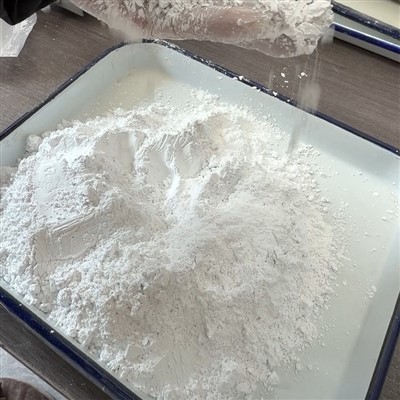
As a supplier of hydrated lime powder, we are committed to providing our customers with the highest – quality product. Our state – of – the – art production facilities and strict quality control measures allow us to meet the diverse needs of our customers in various industries.
Limestone Powder If you are interested in our hydrated lime powder or have any questions about its production or applications, we welcome you to contact us for procurement and further discussions. We look forward to establishing a long – term and mutually beneficial partnership with you.
References
- "Lime – Basics and Applications" by the Lime Association of Europe.
- "Industrial Minerals and Their Uses" by F. W. Clarke.
- "Handbook of Chemical Technology and Pollution Control" by Warren D. King.
Chaohu Jirun Energy Conservation and Environmental Protection Technology Co., Ltd.
We’re well-known as one of the leading hydrated lime powder manufacturers and suppliers in China, also support customized service. Welcome to wholesale high quality hydrated lime powder in stock here from our factory. If you have any enquiry about pricelist, please feel free to email us.
Address: No. 9, north of the intersection of Weihai Road and Weili Avenue, within the industrial park of Yinping Town, Chaohu City, Hefei City, Anhui Province.
E-mail: 13305654485@163.com
WebSite: https://www.chaohujirun.com/
