Hey guys, let’s cut to the chase—if you work in manufacturing, material handling, or even just run a small landscaping business that uses heavy-duty equipment, you’ve definitely asked yourself this at some point: weldless chains worth the hype? And more importantly, do they need some weird, fancy maintenance that I’ve never heard of before? As a weldless chain supplier who’s been in this game for over 12 years, I get it—there’s a ton of misinformation out there about these things. Some guys swear they’re “set it and forget it,” others say they’ll snap if you so much as glance at them wrong. Today, I’m setting the record straight, no corporate jargon, no overpromising—just the real tea on weldless chain maintenance. Weldless Chain
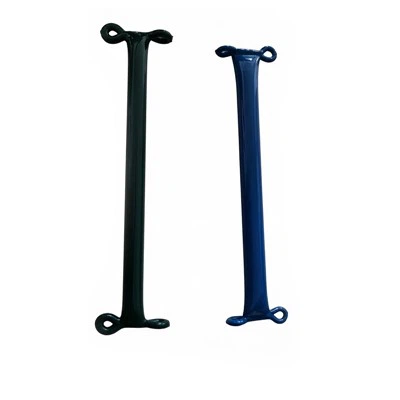
First, let’s quick refresh what we’re actually talking about here, because I’ve had so many customers mix these up with regular link chains. Weldless chains are made of individual steel links that you connect with hardened steel pins, not welded together. That might sound like a weaker design at first, but the pin-and-link connection is actually engineered to distribute stress way more evenly than a welded seam, which can get brittle over time from heat. The catch? That pin-and-link setup means there are tiny moving parts, and like any moving part on a machine, they need a little care to keep performing. But here’s the big news: it’s not special maintenance. It’s just smart, regular maintenance tailored to their design. You don’t need a $500 grease gun or a fancy calibration tool. Most of what I’m gonna tell you is stuff you probably already do for other parts of your equipment.
Let’s start with the most common question I get: “If weldless chains don’t have welds, why do they break?” 9 times out of 10, it’s not a flaw in the chain—it’s lack of basic maintenance, or even using the wrong chain for the job. Wait, hold on—using the right chain is actually part of maintenance, right? Let’s talk about load matching first. I had a customer last year who bought a ¼-inch weldless chain for his construction skid steer, trying to save a few bucks on a replacement chain for his pallet forks. He was lifting 1,800 pounds on the regular, and that ¼-inch chain is only rated for like 1,200 pounds. Three months later, he texts me panicking because the chain pulled apart mid-lift. That’s not a maintenance issue—that’s a user error, but it’s the kind of thing I have to bring up because it’s tied to how the chain holds up. Weldless chains have specific weight ratings per size, and every application (lifting, towing, conveyor systems, farm equipment) has different stress demands. If you’re putting a chain through more work than it’s built for, no amount of maintenance will save it. So first rule: match your chain to your load. That’s non-negotiable, and it’s the first line of “maintenance” before you even start using it.
Now, once you’ve got the right chain for the job, what do you do to keep it running? Let’s break this down by use case, because a chain on a farm tractor in Iowa has way different conditions than a chain on a cold storage conveyor in Alaska.
First, the big one: lubrication. This is where most people mess up, or underdo it, because they think “it’s a chain, grease it occasionally.” But weldless chains have tiny gaps between the links and the connecting pins, and when dust, dirt, grass clippings, or sand get in there, they act like sandpaper. Over time, that wears down the pins and the inside of the links, making the whole chain stretch unevenly. That stretch is what leads to slipping, skipping on sprockets, or even sudden failure. So how do you lubricate a weldless chain? It’s super simple—no fancy products needed. I recommend a heavy-duty, adhesive-based chain lubricant, not the thin spray you use on your bike chain. The thin stuff evaporates in 2 weeks, especially if you’re working outdoors in 90-degree heat or throwing gravel around. The adhesive grease sticks to the metal, pushes into those tiny gaps, and keeps dirt out. How often? If you’re using the chain daily for heavy loads (like a conveyor running 12 hours a day), lubricate it every 2 weeks. If it’s occasional use, like a farm chain you only pull out during harvest, lubricate it before you store it and before each use that season. Pro tip: wipe off any excess grease after you apply it. I’ve had customers show me chains caked in old grease and dirt, and that’s worse than no grease at all. The built-up gunk traps moisture, leading to rust, and makes the chain run heavier than it needs to.
Next, tension. Weldless chains stretch over time—it’s normal, even with good lubrication. The pin-and-link connection is designed to flex a little under load, and that flex can cause the links to separate slightly, leading to stretch. But if the tension is too loose, the chain will slap against the sprockets, wear unevenly, and even jump off entirely. If it’s too tight, it puts extra stress on the pins and links, leading to premature wear. So how often do you check tension? Again, depends on use—daily for high-cycle applications, once a week for occasional use. The test is simple: lift the chain halfway between the two sprockets. If it moves more than 2 inches (for most standard weldless chains), it’s too loose. Adjust it to where it moves between 1 and 2 inches— that’s the sweet spot. And here’s a key point: when you adjust tension, never just adjust one side of the chain. That causes misalignment, which wears down one side of the chain way faster than the other. It takes an extra 2 minutes to do both sides, but it saves you from having to replace a whole chain 6 months early.
Now, what about environmental factors? If you’re using your weldless chain in harsh conditions—salt air near the coast, high humidity in a food processing plant, or dusty construction sites—you’ve got to adjust your maintenance routine. For coastal or high-moisture environments, rust is the biggest enemy. Even steel chains that look “galvanized” will rust if the coating scratches, and that scratch is super common on a weldless chain from regular use. So here, I recommend adding a rust inhibitor to your lubricant every time you re-grease, and giving the chain a full wipe-down with a cloth every week to remove salt residue. For dusty or dirty sites, maybe add a quick blast of compressed air to the links before lubricating, to blow out all the dirt and gunk that’s trapped in there. I once had a customer in Arizona running a conveyor for a gravel mine—he was greasing monthly, but wasn’t blowing out the dirt, so his chain was wearing through pins every 3 months. Once he started blowing it out every 2 weeks before greasing, that went up to 18 months between pin replacements. Small change, huge difference.
Wait, let’s talk about common mistakes people make that they think are maintenance, but actually aren’t. First, replacing only one link or one pin. I get it—if you notice one link is worn, you just wanna swap that one out to save money. But weldless chains are made to flex as a whole unit, so replacing individual pieces causes inconsistency in the length and tension of the chain. That misalignment leads to faster wear on the rest of the chain, and can even damage the sprockets. If you have a worn link or pin, replace an entire section of the chain, or better yet, replace the whole chain if it’s already showing signs of wear in multiple spots. Another mistake: using a hammer to hammer the pins in. I see this all the time—guys trying to put together a weldless chain on the job site, grabbing a random hammer, and banging the pins so hard they bend. Bent pins mean uneven tension, and they break way faster. Weldless chain pins should be pressed in properly with a hydraulic press or a specialized pin tool. It takes 10 extra seconds, but it keeps the pin straight and the connection solid. I once had a guy come to me with a chain that had pins he hammered in, and 2 weeks later, half the pins were bent, and the chain was ready to snap. That’s preventable.
Now, let’s address the myth that weldless chains need special tools or training for maintenance. I’ve had a few customers ask me if they need to send their operators to a $1,000 training course just to maintain their chains. No, you don’t. All the maintenance I’ve talked about here uses basic tools you probably already have: a grease gun, a pair of pliers, a tape measure, maybe some compressed air. The only “special” thing about weldless chain maintenance is that you have to remember the small gaps between links and pins—you can’t just spray a little grease on the surface and call it a day. Regular welded chains are a different beast; their maintenance is more about checking weld integrity, which weldless chains don’t have. So it’s not harder, it’s just different.
Wait, what about storage? That’s a big part of maintenance too, right? A lot of people store their chains in a pile in the corner of their shop, or outside in the elements. That’s a quick way to ruin a weldless chain. If you’re not using a chain for more than a month, clean it off, lubricate it, and hang it up straight, not in a pile. Piled chains kink, which puts permanent stress on the links and pins, and they trap moisture, leading to rust. If you have to store it for longer than that, wrap it in a plastic sheet to keep dust and moisture out. I had a customer who kept a backup chain for his farm truck in a pile in his barn for a year. When he finally pulled it out, half the pins were rusted, and some links were bent. If he’d hung it up, it would’ve been good as new.
Let me share a real customer success story to put this all in perspective. A friend of mine runs a small landscaping company in Ohio, with 12 dump trucks and several trailers with lift chains. A few years ago, he switched from welded chains to our weldless chains because his old welded chains were snapping every 8 months, costing him downtime and money. He followed the maintenance routine I outlined: greased every 2 weeks, checked tension weekly, blew dirt out in the summer, hung chains when not in use. Those weldless chains are now going strong after 3 years, no failures, no replacements needed. He told me he saves about $1,500 a year on replacement chains and downtime, just from following those simple steps. That’s not a special maintenance routine—that’s just taking care of the equipment you already have.
Now, let’s wrap this up with the honest truth: weldless chains don’t require special maintenance. They require consistent, basic maintenance that you should be doing for any industrial chain or moving part. The only “special” thing is that you have to pay attention to those pin-and-link connections, because that’s their weakest (but most efficient) point. The good news is that once you get in the habit of checking tension, lubricating when needed, and cleaning off gunk, it becomes second nature. You don’t have to overcomplicate it.

If you’re still on the fence about whether your weldless chain is being maintained right, or if you need help picking the right chain for your application, feel free to reach out to us to chat through your needs. No sales pitch, no pressure—just straight advice from someone who’s been selling these chains for over a decade and has seen every win and every mistake.
Clothes Rack References
- American Society of Mechanical Engineers (ASME). (2020). Standard for Chain Drives. ASME B29.1.
- National Association of Chain Manufacturers (NACM). (2021). Weldless Chain: Installation and Maintenance Guidelines.
- Occupational Safety and Health Administration (OSHA). (2022). Chain Safety and Maintenance for Material Handling Equipment. OSHA 3139-12R.
Pujiang Shenli Chain Co., Ltd.
We’re well-known as one of the most experienced weldless chain suppliers in China, featured by quality products and low price. Please feel free to buy discount weldless chain made in China here from our factory. Contact us for more details.
Address: No. 18, Zaifeng Road, Pujiang County, Zhejiang Province
E-mail: Chen@shenlichain.com
WebSite: https://www.chainshenli.com/
