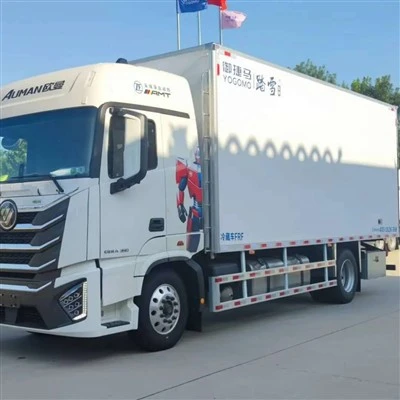
Alright, let’s dive into this – I get asked this question all the time from food truck owners, ice cream delivery folks, and small business owners testing out their first chilled haul: can a pickup truck refrigerated box actually work for transporting ice cream? Spoiler: the short answer is YES, but it’s not just “slap a cold box on your pickup and go.” Let’s break this down like I explain it to my team every morning – no fancy jargon, just real talk that’s backed by what we see on our order logs and industry data. Pickup Truck Refrigerated Box
First, let’s start with what makes ice cream weird. Most frozen cargo is, well, solid – think frozen veggies, meat, or ice packs. But ice cream is a delicate little devil: it’s 10-20% air (that’s the overrun, for my small business crew), it has emulsifiers and sugar that lower its freezing point, and if it warms up even 5 degrees Fahrenheit, it gets soft, starts to crystallize, and that’s when you end up with a container of goo instead of scoops. That’s not a customer win, right?
Now, our pickup refrigerated boxes – what makes ’em different from a random cooler you’d grab at a hardware store? Let’s get into the science here, plain and simple. Your standard chest cooler is passive: it works by insulation, but once the ambient temp hits, it can’t keep pulling heat out. Our units? They’re active refrigeration systems – not just a styrofoam shell. Let’s walk through the specs we build for our boxes: the compressor we use is a high-quality, low-draw unit (we test ’em in 95°F heat and -10°F cold, no joke) that can maintain temps consistently between -10°F and 35°F, depending on what you’re hauling. For ice cream? You need to lock that in at -5°F to 0°F, no exceptions. A lot of people think “refrigerated means cold” – but for ice cream, it’s got to be stable cold. Fluctuations are the killer here.
Wait, let’s test a real scenario. Last summer, a local ice cream shop here bought one of our standard short-bed pickup boxes to deliver to farmers’ markets. Before that, they used a big coolers with dry ice, and they were losing 20-30% of their stock every time they hit a traffic jam. Why? Dry ice sublimates – it turns to gas – so if their route took an extra 45 mins, they were short on ice and the temp spiked. With our box, even in 100°F weather, their compressor runs at idle when the truck’s moving, and it kicks up a notch when they’re loading/unloading for 10 mins at a market. They told us last week they only lost one pint all season – and that was because they forgot to close the door for 2 mins. Oops, relatable.
But hold up – it’s not just the box itself. A lot of new customers miss this part: how you load the ice cream matters. You can’t cram all the pints into the front of the box and leave a gap at the back. Wait, why? Because cold air sinks, duh. That’s basic HVAC, right? We tell all our clients: arrange the ice cream in tight, uniform layers, leave no empty space, and if you have extra room, add a few frozen ice packs (not the gel kind – the solid frozen ones) along the sides and top. That way, the cold air circulates instead of just sitting in one spot. If you’ve got a gap, the warm air settles there, and you get hot spots – which turn pints slushy. We also recommend pre-cooling the box for 2 hours before loading. Don’t just throw your ice cream in right after you finish driving the truck around – let the compressor pull that temp down steady first. We include a little pre-cooler timer with every unit, because I’ve seen so many people skip that step and think the box is broken when their ice cream melts.
Now, let’s address the common myths I hear: “A pickup box is too small for big orders.” No, we build sizes from 6 cubic feet (for small weekend pop-ups) all the way up to 40 cubic feet (for bulk deliveries to grocery stores). One of our regulars is a regional ice cream distributor who uses a 35 cubic foot box on a half-ton pickup – they run routes across 3 states, no issues. They switched from a semi-trailer reefer a year ago, and their fuel costs dropped 25% because pickups are way more efficient than big rigs for short hauls. Another myth: “Pickup boxes aren’t durable enough for rough roads.” Our boxes are made with aluminum exteriors, polyurethane foam insulation (not the cheap polystyrene that crumbles), and reinforced mounting brackets that bolt straight to your truck bed – no drilling, no bending. We test ’em on backroads, construction zones, even snow routes in the winter – I’ve had a customer haul our box through a blizzard last January and his ice cream was still frozen solid when he arrived.
Wait, what about the electrical side? That’s a big one for pickup refrigerated boxes. Most people don’t want to run a separate gas generator – that’s loud, stinky, and costs a fortune. Our boxes use the truck’s existing 12V or 24V electrical system, with a smart inverter that kicks in when the truck’s engine is running, and it switches to battery power for 2 hours when the engine’s off. That’s perfect for farmers’ markets or events where you park and leave the box idling for a bit. No extra fuel needed, no fumes inside the box – which is crucial because you don’t want exhaust fumes mixing with your ice cream. We’ve had zero complaints about fumes in 5 years of making these boxes, because we sealed the compressor compartment away from the cargo area.
But let’s be real – it’s not a perfect solution. If you’re doing a 12-hour cross-country haul, a pickup box might not be enough on its own. You’d need to supplement with backup cold packs, or have a way to top up the compressor. But for local and regional routes – under 8 hours, most of which are city or highway driving? Absolutely ideal. It’s cheaper than a full refrigerated van, easier to maneuver in tight spaces (like alleyways for small businesses), and you can use the pickup bed for other stuff when you’re not hauling ice cream – like tools, extra coolers, whatever. That’s the flex people love, right? You don’t have a single-use vehicle – you’ve got a truck that works for your business and your personal life.
I’ve also seen a lot of small business owners go the cheap route: buy a random refrigerated box online for $500, no warranty, no specs. Don’t do that. The key here is consistent temp control. Those cheap boxes might get cold, but they can’t maintain it. So when your route is delayed, you end up with spoiled product. Our boxes come with a 2-year warranty, and we offer a free temp sensor app that lets you track the cargo temp from your phone. If it spikes, you get an alert – that’s saved a lot of our clients from disaster. Last month, a bakery that uses our box for frozen desserts got an alert that their door wasn’t closed all the way, and they fixed it before any product went bad. That’s the value of a box built for transporting frozen goods, not a generic cooler.
Let’s wrap this up. So to answer the question: yes, a pickup truck refrigerated box is not just usable for ice cream – it’s a game-changer for small to mid-sized ice cream businesses. It’s cost-effective, flexible, and when you pair it with proper loading (no gaps, pre-cooling, tight layers) and regular maintenance (checking the compressor, keeping the door seals clean), it works way better than you’d think. We’ve got hundreds of clients across food services, frozen goods, and even pharmaceutical transport that swear by our boxes for ice cream deliveries.

If you’re an ice cream shop owner, distributor, or someone looking to start a frozen haul business, we can help you pick the right size, customize features (like extra door seals for frequent loading, or a lock to keep pints safe at markets), and walk you through exactly how to use your box for ice cream. No pushy sales stuff, just straight talk about what works and what doesn’t. If you’re tired of losing stock to melted ice cream or overpaying for big refrigerated vehicles, hit us up to chat through your needs.
Refrigerator Truck References:
- USDA Food and Drug Administration. (2021). Temperature Control for Frozen Food Transportation.
- National Association of Concessionaires. (2022). Best Practices for Mobile Frozen Goods Storage.
- Small Business Administration. (2023). Cost-Effective Refrigeration Solutions for Local Distribution.
Hebei Three Sworn Brothers Special Purpose Vehicle Co., Ltd.
We are one of the most professional pickup truck refrigerated box manufacturers and suppliers in China, featured by quality products and good price. Please rest assured to wholesale durable pickup truck refrigerated box for sale here from our factory. Welcome to view our website for more information.
Address: No.19,Taihang South Road, Economic Development Zone,Qinghe County, Hebei Province
E-mail: miaj@cnreeferbox.com
WebSite: https://www.cnreeferboxes.com/
