Hey everyone, let’s cut through the fluff today and talk about something I get asked a ton as a sheet metal supplier: what even is the function of a sheet metal punch? And no, I’m not gonna ramble with super technical jargon that makes your eyes glaze over—we’re keeping this real, like how I chat with guys who run fabrication shops or order metal parts for their projects. Sheet Metal

First off, let’s get one thing straight: a sheet metal punch isn’t some random hole-puncher you use for office paper. That’s like calling a semi-truck a golf cart—it’s in the same family but built for a whole different job. For anyone who’s new to the game, sheet metal punches are core tools (either manual, pneumatic, hydraulic, or even laser-assisted these days) that cut, shape, or create holes in thin to medium-gauge sheet metal. But here’s the kicker: their function isn’t just “making holes.” Let’s break this down like we’re troubleshooting a common order mix-up, because that’s how I learn best.
When I first started in this business, 15 years ago, I thought a punch was just for drilling holes so bolts could slide through. Fast forward to last week, I had a guy call me panicking because his old shop was using a drill press to make 200 identical mounting holes for HVAC duct brackets—and every fifth one was off, leading to 2 hours of rework per batch. Turns out he didn’t know a sheet metal punch can do that job in 90 seconds per part, and every single hole is precise. That’s the first big function: creating clean, consistent holes for fasteners, alignment pins, or electrical conduit. No burrs, no uneven edges, no drilling-induced warping that messes up your assembly.
Wait, but what if you don’t need a round hole? Oh, right—sheet metal punches come with custom dies for every shape under the sun. I’ve sent parts to customers with square holes for electrical enclosures, keyholes so they can hang a panel with one hand, slot holes for adjustability on shelf brackets, even weird semi-circles for custom control panels. Last month, a aerospace parts maker hit me up for 500 triangular holes in 16-gauge aluminum for a satellite component. A drill would’ve chipped the thin metal, but a punch? It shears the material cleanly along the die’s edge, no splintering. That’s another key function: cutting custom-shaped openings that would be a nightmare to do with other tools.
But here’s where I see most people sleep on the punch’s real superpower: forming features, not just cutting them. Think about it—when you run a bolt through a hole, the sheet metal around that hole can flex, right? A sheet metal punch doesn’t just cut; it can create a counterbore or a countersink that lets a bolt head sit flush, so your panel sits flat against whatever it’s mounted to. No sticking out bolts that scratch paint or interfere with adjacent parts. I had a cabinet maker order 1,000 kitchen cabinet door panels last quarter, and he specified counterbores for the hinge bolts. The punch did all of them in one pass, and when he installed the hinges, every single one lined up perfectly—no gaps, no wobbly doors. That’s not just a function, that’s saving a guy thousands in callback fees.
And let’s not forget about embossing or dimpling. Yeah, I said embossing. Some punches have a raised die that pushes the metal up (or down, depending on your setup) without cutting all the way through. For example, a dimpled hole lets a self-clinching fastener lock into place permanently, no threading required. That’s huge for electronics enclosures—you don’t have to tap threads, which can get stripped if you over-tighten a screw. I supply a lot of small electronics startups, and they love this because it cuts down on assembly time by hours. One customer told me that switching from tapped holes to dimpled holes via punch cut their final assembly time in half.
Now, as a sheet metal supplier, I’m not just selling you the raw metal—we’re collaborating on your whole part design, and punches are a big part of that conversation. A lot of people come to me with a part that works in their head but won’t work because they didn’t account for punch functionality. Like, if you need a hole that’s too close to the edge of the sheet metal, a punch can only go so far before it causes the metal to tear. That’s something I’ll point out early, so you don’t waste money on a custom sheet that has to be scrapped. Last year, a guy tried to make a custom metal cover for his truck, and his first prototype had a hole 1/8 inch from the edge. I told him that was too tight for our punch to do cleanly, so we adjusted it to 3/16 inch, and the final part was perfect. No rework, no wasted material, just a part that worked the first time.
Wait, let’s get into the nitty-gritty of how the function actually works, because I think that makes it make more sense. A sheet metal punch works by applying high, controlled force to a sharp punch (the male part) that’s pressed through the sheet metal into a matching die (the female part). The metal shears between the punch and die, creating the shape you want. Unlike laser cutting, which can melt metal, or sawing, which can leave rough edges, punching is a cold process—so the metal doesn’t warp or heat up, which is critical for materials like aluminum or stainless steel that can discolor or get weak if they’re heated too much. I used to work with a stainless steel food equipment maker, and they’d avoid laser cutting because the heat would leave a dark stain on the metal that couldn’t be polished out. Switching to punching fixed that immediately—clean edges, no stains, perfect for food-grade parts.
Another function I love to highlight: high-volume production. I can knock out 10,000 identical punched parts in a day, no problem. A drill press would take way longer, and the consistency would be way worse. Last month, a commercial HVAC company needed 15,000 mounting brackets for a new office building, and we used our hydraulic punch press to do all the hole punching. They needed every bracket to have the same hole spacing, and we hit 100% accuracy on the first run. That’s the value right there—speed and consistency that keeps projects on schedule, which keeps our customers happy and their clients happy too.
But wait, it’s not all high-volume industrial stuff. I also work with small businesses and hobbyists, and I’ve helped a guy who makes custom metal art for restaurants. He was hand-cutting holes in his metal signs with a jigsaw, and they looked rough. We brought in a manual sheet metal punch for small orders, and now his signs have crisp, clean holes that make the art pop. He told me he’s doubled his sales since switching—because his parts look more professional. So punches aren’t just for big companies; they’re for anyone who needs clean, precise metal parts, no matter how many you’re making.
Now, let’s talk about common misconceptions, because that’s where I see people go wrong. A lot of folks think a punch is only for thin metal, but we have punches that can handle up to ¼-inch steel—thick enough for trailer hitch parts or heavy equipment brackets. It’s all about the type of punch (hydraulic is best for thicker metal, pneumatic is fast for thin, manual is good for small orders) and the right die. I always ask customers about their material type, gauge, how many parts they need, and what the final part will be used for—because that determines which punch method will work best for their project.
As your sheet metal supplier, my job isn’t just to cut a sheet to size and send it your way. It’s to make your job easier, and understanding the function of a sheet metal punch is a big part of that. If you’re designing a new part, and you’re not sure if punching is the right method, or if your hole spacing is correct, or if you even need a hole at all—hit me up. I’ll walk you through it, no pressure, no sales pitch that’s hard to follow. I’ve been in this game long enough to know that the best parts come from collaborating, not just taking an order and checking it off.
Like, last year I had a customer who wanted a custom metal sign for their bar, with cut-out letters that had holes in the centers of each letter. They were thinking of using a laser cutter, but that would’ve cost them twice as much as punching and been slower. I suggested we punch each letter’s center as a separate shape, then assemble the parts—same look, lower cost, faster turnaround. They loved it, and the sign is now the main feature of their bar. That’s the kind of win I live for—helping someone get exactly what they need without overcomplicating things.
I know a lot of people in this industry talk about punches like they’re just another tool, but to me, their function is all about making metal work for you. Whether you’re making a tiny electronic enclosure that needs precise holes for screws, a large HVAC bracket that needs to hold 50 pounds of ductwork, or a custom metal art piece that needs to look perfect for a restaurant, the sheet metal punch is the workhorse that makes all those things possible. It’s not flashy, it’s not new, but it’s essential—like a good pair of work boots, or a trusted wrench you reach for every time you need to get a job done right.
At the end of the day, if you’re working with sheet metal, whether you’re a fabricator, a small business owner, a hobbyist, or someone who just needs custom metal parts for a project, understanding what a sheet metal punch does will save you time, money, and frustration. It’s not just a hole-maker, it’s a precision tool that delivers consistent, clean results, no matter the size of your order or the complexity of your design.
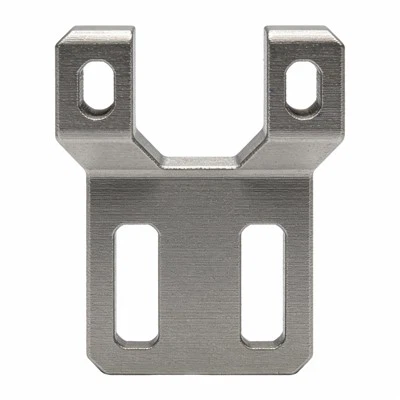
If you’ve got a project coming up—whether it’s 10 parts or 10,000, or you just have questions about which punch method works best for your needs—reach out. I’m here to help you figure it out, no confusing jargon, no pushy sales tactics. Let’s build something that works, together.
3D Printing Service References:
- Sheet Metal Fabrication Handbook, Society of Manufacturing Engineers, 2021
- Practical Sheet Metal Tooling and Techniques, Industrial Press, 2019
- Modern Metal Forming Processes, Elsevier, 2020
- The Fabricator’s Guide to Precision Hole Punching, Fabricators & Manufacturers Association International, 2022
Shenzhen Jingcheng Dingyi Forming Technology Co., Ltd.
Shenzhen Jingcheng Dingyi Forming Technology Co., Ltd. is one of the most professional sheet metal manufacturers and suppliers in China, also supports customized service with low price. Please feel free to buy bulk cheap sheet metal from our factory. For quotation, contact us now.
Address: 1st Floor, Building 3, Huafeng Zhenbao Industrial Park, No.137 Shihuan Road, ShiYan Town, Bao’An District, ShenZhen, PRC
E-mail: 13071475061@163.com
WebSite: https://www.jctop-cnc.com/
