If you’ve ever stood in a construction yard watching a 40-ton excavator lift a pile of concrete blocks, or seen a garbage truck compress a full load of waste into a compact cube, you’ve witnessed pistons at work—though you might not have stopped to notice them. For over 15 years, I’ve supplied high-precision hydraulic pistons to manufacturers across the agriculture, construction, and material handling industries, and let me tell you: pistons are far more than just metal cylinders. They’re the quiet workhorses that turn pressurized hydraulic fluid into the force that powers almost every heavy machine we rely on to build, harvest, and maintain our daily lives. Today, I want to pull back the curtain on exactly how these small, critical components are used in hydraulic systems, and why choosing the right piston isn’t just a part choice—it’s a choice that defines a machine’s reliability, efficiency, and long-term performance. Piston
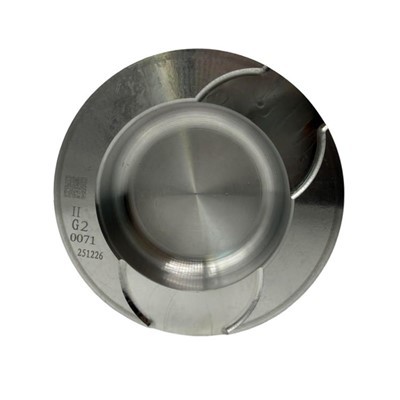
Let’s start with the basics, because you can’t talk about applications without grounding things in how hydraulic systems function. A hydraulic system works on Pascal’s Principle: when you apply force to a confined fluid, that pressure is transmitted equally in all directions, multiplied only by the area of the surface it’s pushing against. A hydraulic piston is that surface, a precision-machined cylinder that slides inside a matching bore, sealed to prevent fluid leakage, and connected to a rod that transfers force to the load. At its core, a hydraulic piston’s job is simple: convert hydraulic pressure into linear mechanical motion. But how that motion is used varies wildly, depending on the industry and machine.
Let’s start with construction equipment, because that’s the space I cut my teeth in as a supplier. Excavators are the most obvious example, but let’s break it down beyond the boom and bucket. Most mini-excavators used for residential digging and landscaping have four primary hydraulic pistons, each serving a distinct function. The boom piston is the largest, with a bore typically between 50mm and 120mm, designed to lift 10,000 pounds or more—enough to dig a 10-foot deep trench in a single lift. The arm piston controls the angle between the boom and the bucket, letting operators reach into tight spaces or dig narrow ditches. The bucket piston adjusts the angle of the bucket itself, from flat for digging to curled for holding soil or rocks. Even the swing mechanism, which lets the excavator turn 360 degrees on its tracks, uses a hydraulic piston to lock the swing gear in place when not in motion, preventing dangerous drift on uneven ground. I’ve seen first-hand how a faulty piston here can turn a routine job into a disaster: a customer of mine once had a boom piston fail mid-lift, dropping a 2-ton concrete footing onto a worksite and causing $12,000 in damage and three days of downtime. That’s why we prioritize finish-machining our pistons to within 0.002mm of tolerance—even a tiny imperfection in the cylinder wall or seal can lead to pressure loss and failures like that.
Moving from construction to agriculture, pistons are the unsung heroes of modern farming, where every minute of downtime during planting or harvest season can cost a farmer tens of thousands of dollars. Take a combine harvester, for example: it has over a dozen hydraulic pistons controlling everything from the header that cuts wheat to the wheel brakes. The header piston is particularly critical, as it adjusts the height of the cutting bar to match the uneven terrain of a field. When a farmer is harvesting 100 acres of corn in a single day, a header that’s too high misses 5% of the crop, and too low cuts into the soil, damaging the bar and mixing dirt with the grain. Our customers in the Midwest tell us that a single replacement header piston can add 2-3 acres of harvested grain per day—hard numbers that directly translate to their bottom line. Another common agricultural application is the tractor loader, used to move hay bales, feed, or soil. The lift piston on a tractor loader is designed to handle heavy, uneven loads, and many farmers run their machines 12-16 hours a day during peak season, so durability is non-negotiable. That’s why we use chrome-plated rods on our agricultural pistons to resist corrosion from fertilizer dust and rain, and heat-treated alloy steel to prevent warping under constant heavy load.
Now, let’s talk about material handling equipment, the stuff you see at warehouses, ports, and recycling centers. Forklifts, for example, rely on hydraulic pistons to lift loads that would be impossible to move with just electric motors. A standard 5,000-pound forklift has two main lift pistons, mounted on either side of the mast, that work in sync to lift pallets 20 feet or more. What’s interesting here is that forklift pistons are designed for controlled, precise motion—not just brute force. A good piston will let an operator lift a 2,000-pound pallet of fragile glass without shifting it, because its seal design prevents pressure spikes that could cause jerky movement. We also supply pistons for reach stackers, the massive machines that move shipping containers at ports. A single reach stacker can lift a 40-foot container weighing 60,000 pounds, and its piston has to handle not just vertical force, but side load when the container is offset slightly. Years ago, we had a port customer who was switching from generic imported pistons to ours after a container fell 3 feet because a piston seal failed mid-lift. Over the next two years, using our custom-designed side-load resistant pistons, they saw a 70% drop in piston-related downtime, saving them over $200,000 in lost productivity and damage. That’s the value of a piston that’s tailored to its specific application, not a one-size-fits-all part.
Beyond the heavy machinery most people recognize, pistons are used in a range of industrial and niche applications that are just as critical. For example, in manufacturing, hydraulic presses use large-format pistons to form metal parts for cars, appliances, and aerospace components. A typical automotive stamping press has a piston with a bore of 200mm or more, generating 50 tons of force to shape a car door panel in a single stroke. Precision is everything here; even a 0.1mm deviation in the piston’s alignment can result in a defective part that has to be scrapped. We supply pistons to a few aerospace component manufacturers, where the tolerances are even tighter—some pistons for satellite launch equipment have to operate at pressures over 3,000 PSI, with zero leakage, to ensure the rocket’s launch system functions correctly. Even in the food and beverage industry, hydraulic systems use pistons to fill cans and bottles with products like soda or cooking oil. The piston here is made of food-grade stainless steel, with seals that are FDA-approved, to prevent contamination and withstand frequent cleaning with harsh chemicals.
Now, as someone who’s spent decades talking to machine operators, maintenance managers, and engineers, I can tell you that one of the biggest mistakes I see is assuming all hydraulic pistons are the same. A piston designed for a small excavator won’t hold up in a port reach stacker, and a piston made for agricultural dust won’t last in a food processing plant. The material, tolerance, seal type, and coating all have to match the application’s specific demands. For example, in coastal areas with high salt air, pistons need special corrosion-resistant coatings to prevent pitting, which can cause seals to wear out prematurely. In high-temperature applications like metal stamping, pistons need to handle consistent heat without losing their hardness, so we use heat-treated chrome-molybdenum alloy instead of standard carbon steel.
I also want to address a common question I get: do hydraulic piston designs change with new technology? The answer is a resounding yes. As machines get more efficient and operators demand more control, piston manufacturers are adapting. For example, smart pistons with integrated position sensors are becoming more common in construction equipment, letting operators get real-time data on how far a piston has extended, which improves precision and reduces operator fatigue. We’ve invested in adding these sensor-compatible pistons to our line over the last three years, because our customers have been asking for that data to help them monitor equipment health and schedule maintenance before a failure happens. It’s a shift from reactive part replacement to predictive maintenance, and pistons are at the center of that change.
After 15 years in this business, I’ve learned that the best pistons aren’t just parts—they’re solutions. A piston is the difference between a machine that works 20 hours a day without issue and one that’s sidelined for days waiting for a replacement. It’s the difference between a farmer hitting his harvest deadline and missing it. It’s the difference between a port moving hundreds of containers a day and falling behind schedule. That’s why I don’t just sell pistons—I work with our customers to understand their specific application, their operating environment, and their performance goals, so we can build or source the right piston for them.
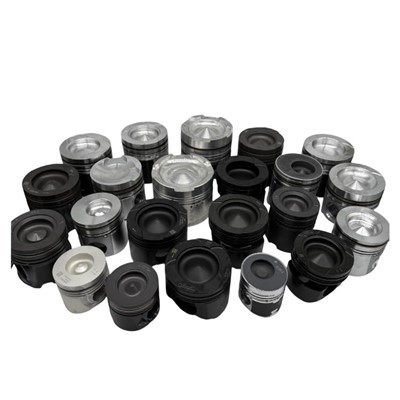
If you’re in the market for hydraulic pistons for your construction, agriculture, material handling, or industrial equipment, I’d encourage you to reach out to our team. We have experience working with machines of all sizes and applications, and we can help you find a piston that improves reliability, reduces downtime, and fits your budget. Whether you need a standard replacement part or a custom-designed piston for a unique machine, our team is here to help you find the right solution.
YUNNEI Piston References:
Hydraulic Piston Design and Application Handbook, 3rd Edition, Industrial Press, 2021.
Pascal’s Principle and Hydraulic Systems, Fluid Power Society, 2019.
Corrosion Resistance in Hydraulic Components, Journal of Industrial Maintenance and Technology, Volume 27, Issue 4, 2022.
Precision Machining for Heavy Machinery, Machinery Manufacturing Association, 2020.
Hydraulic System Efficiency and Piston Performance, International Journal of Fluid Power, Volume 23, Issue 2, 2022.
Hebei Yuwei Piston Co., Ltd.
As one of the most professional piston manufacturers and suppliers in China, we’re featured by quality products and good service. Please rest assured to buy customized piston made in China here from our factory. Also, quotation is available.
Address: Beizhujiacun Village, Sujiuzhuang Town, Ningjin County, Xingtai City, Hebei Province
E-mail: jack@ywpiston.com
WebSite: https://www.ywpiston.com/
